SpaceX Starship Reaches Orbit for First Time Before Ending Early
Yesterday in Texas, SpaceX's supersized Starship megarocket successfully reached orbit for the first time before its flight ended early.
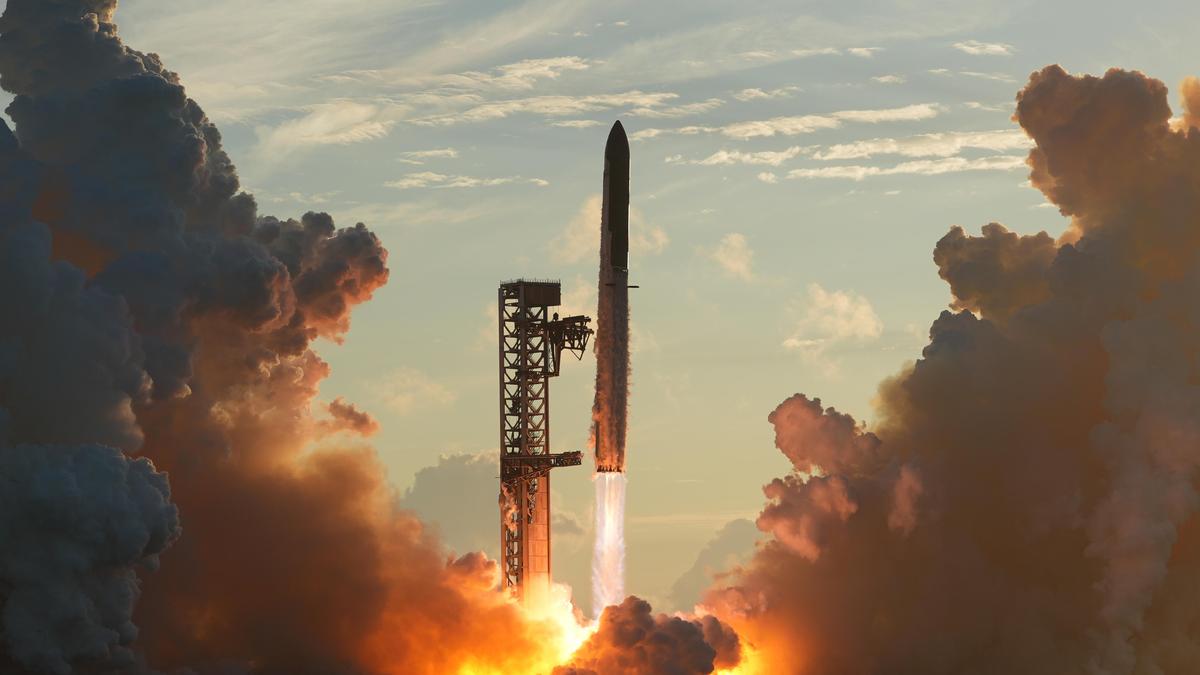
SpaceX's Starship, the largest and most powerful rocket ever built, reached orbit for the first time on Sunday, September 27, 2026, launching from the company's Starbase facility in Boca Chica, Texas. The successful orbital insertion marked a critical milestone for the fully reusable launch system, which is central to NASA's Artemis program for returning humans to the Moon and SpaceX's long-term goals for Mars missions. However, the flight ended earlier than planned when the vehicle was lost during the descent phase over the Indian Ocean, preventing the completion of all test objectives. This launch followed a series of previous test flights that had ended in explosions or failures to reach orbit, making the orbital achievement a significant step forward despite the premature conclusion.
SpaceX’s Starship vehicle reached orbit for the first time on Monday after lifting off from the company’s Starbase facility in Boca Chica, Texas, marking a critical milestone in the development of the largest and most powerful rocket ever built (The Hindu). The black-and-silver launch system, standing more than 120 metres tall, rose through a thick cloud of smoke on its 14th test flight, an ambitious mission intended to last roughly ten hours and include the deployment of 26 next-generation Starlink satellites (The Hindu).
The upper stage separated from the Super Heavy first-stage booster and achieved orbital insertion approximately 26 minutes into the flight. As a precaution, the spacecraft had initially been launched on a suborbital trajectory; after deliberation, the launch team executed a second burn to push the vehicle into a stable circular orbit roughly 275 kilometres above Earth, requiring a velocity of about 28,000 kilometres per hour (The Hindu). "Starship is orbital," a member of the launch team announced as cheers erupted in the control room, and satellite deployment began minutes later (The Hindu).
The achievement follows a series of previous test flights, all flown on less demanding suborbital trajectories, that ended in explosions—including breakups over the Caribbean (The Hindu). On this mission, the Super Heavy booster fell into the Gulf of Mexico shortly after stage separation, while the upper stage continued toward its planned orbital objectives. Kathleen Curlee, a senior analyst at Georgetown University’s Center for Security and Emerging Technology, had noted before the launch that the second burn to reach orbit represented "the hardest part," requiring the vehicle to manage complex forces and gravity transitions (The Hindu).
Despite the successful orbital insertion, the flight ended earlier than planned when the vehicle was lost during the descent phase over the Indian Ocean, preventing the completion of the full test profile (AP India). The mission had called for the upper stage to orbit Earth six times before a targeted splashdown in the Pacific Ocean. SpaceX views the orbital milestone as the beginning of an "exciting new phase" of development that will include in-orbit refuelling demonstrations, a capability essential for NASA’s Artemis programme to return humans to the Moon and for the company’s long-term ambitions toward Mars (The Hindu).
AP India·The Hindu