Delhi Police File FIRs Over Anti-CEC Protests
Following demonstrations yesterday demanding the resignation of the Chief Election Commissioner, Delhi Police registered three FIRs without naming any specific individuals or organizations.
Delhi Police has registered three first information reports (FIRs) in connection with protests targeting the Chief Election Commissioner (CEC), though no individuals have been named in the complaints. The development follows demonstrations against the election authority, though the specific timing and nature of the protests are not detailed in the available reports. The cases signal a formal police response to the unrest surrounding the electoral body.
Delhi Police registered three FIRs yesterday under Section 223 BNS for disobedience of lawful orders after protesters attempted to gather at Jantar Mantar despite prohibitory orders, with over 500 people detained during the demonstrations (The Hindu, Indian Express). No individual or organisation has been named as an accused in the FIRs, though details of organisers and participating organisations — including AAP, Left parties, and the Cockroach Janta Party — are recorded in the FIR contents (The Hindu, Indian Express). The Cockroach Janta Party has already announced a march to Delhi on October 10, indicating the protests are part of a sustained campaign rather than a one-off event (Google News India). The FIRs reflect standard procedure for unlawful assemblies that defy police orders, not a targeted crackdown on dissent.
The police claim these FIRs are routine procedure for defying prohibitory orders, yet they omit that the orders themselves were imposed to pre-empt a legitimate democratic demand: the resignation of a CEC whose office has quietly enabled EROs in Delhi to purge voters without documents or hearings via the ECINET portal (The Hindu). Registering cases under Section 223 BNS against unnamed "organisers" while recording the names of AAP, Left parties, and the Cockroach Janta Party in the FIR contents is a deliberate strategy — it keeps the threat of arrest open-ended, allowing the police to pick off leaders at will ahead of the announced October 10 march (Google News India). Over 500 detentions in a single day for attempting to assemble at Jantar Mantar, the designated protest site, reveals the real intent: not law enforcement, but the suppression of a movement challenging the integrity of the electoral roll itself (Indian Express).
The organisers frame the FIRs as a tactic to keep arrest threats "open-ended," yet the same FIR contents they cite explicitly record the names of AAP, Left parties, and the Cockroach Janta Party — meaning the police have already identified the organisers on paper and chosen not to name them as accused (The Hindu). That is the opposite of an open-ended threat; it is a calibrated decision to document participation without escalating to individual criminal liability at this stage. The prohibitory orders were not invented to target this protest — they are standing orders routinely enforced when assemblies exceed permitted limits at Jantar Mantar, and over 500 detentions yesterday reflect the scale of the defiance, not a special vendetta (Indian Express). The ECINET portal changes are an administrative matter before the Election Commission and courts; they do not grant protesters immunity from lawful police directions on the ground.
The police call it "calibrated" to record names without naming accused; that is precisely how a chilling effect works — organisers are identified, the threat is logged, and the October 10 march proceeds under a cloud of selective enforcement (The Hindu, Google News India). Standing prohibitory orders at Jantar Mantar do not erase the constitutional right to protest the ECINET changes that let EROs purge voters without documents or hearings (The Hindu). Over 500 detentions for attempting to assemble at the designated protest site is not routine crowd control; it is a signal that dissent against electoral roll manipulation will be met with mass detention (Indian Express). The FIRs, the detentions, and the unnamed accusations form a single pattern: protect the administrative opacity, punish the public challenge.
Delhi Police registered three FIRs under Section 223 BNS after protesters defied prohibitory orders at Jantar Mantar on October 2, detaining over 500 people while naming AAP, Left parties, and the Cockroach Janta Party in the FIR contents but not as accused (The Hindu, Indian Express). The two sides agree on these facts but disagree on their meaning: police describe the FIRs as a calibrated decision to document participation without immediate criminal liability, while organisers call it a deliberate chilling tactic ahead of a planned October 10 march (Google News India). The load-bearing question is whether the mass detentions and unnamed FIRs constitute routine enforcement of standing orders or a targeted response to protests challenging ECINET portal changes that allow electoral roll deletions without documents or hearings (The Hindu).
Delhi Police registered at least three FIRs on October 3, 2026, related to anti-CEC protests held on October 2.
The HinduThe protests on October 2 were organized by student organisations, political parties, and civil society activists demanding the resignation of Chief Election Commissioner Gyanesh Kumar.
The HinduProtesters attempted to gather at Jantar Mantar on October 2.
The HinduTwo FIRs were registered at Parliament Street police station and one at Connaught Place police station.
The HinduThe FIRs invoke Section 223 of the Bharatiya Nyaya Sanhita for alleged disobedience of an order by a public servant.
The HinduNo individual or organisation has been named as an accused in the FIRs.
The HinduDetails of organisers and participating organisations are mentioned in the contents of the FIRs.
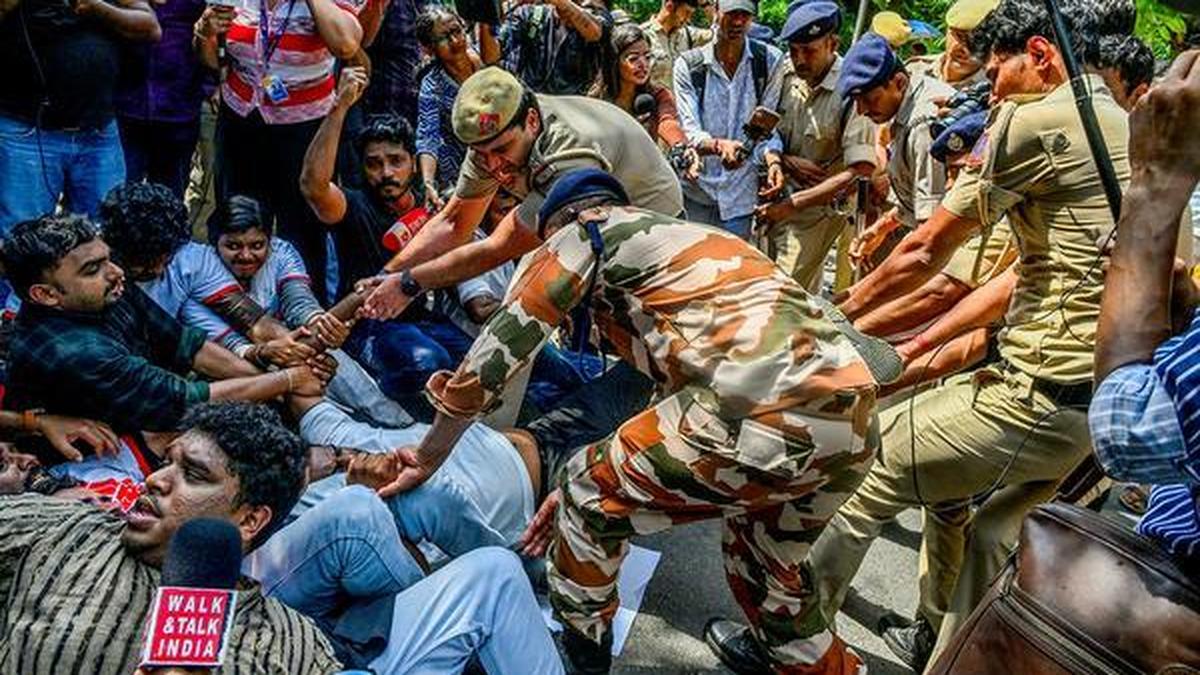
The HinduOver 500 people were detained during the protests in Delhi on October 2.
Indian ExpressAAP and Left parties led the protest in Delhi on October 2.
Indian ExpressThe Cockroach Janta Party (CJP) targeted the CEC and announced readiness for a three-month stir.
Indian ExpressThe Cockroach Janta Party announced a march to Delhi on October 10 demanding the election chief's resignation.
Google News IndiaProtesters were referred to as 'Cockroach' protesters demanding India's election chief resign over voter list changes.
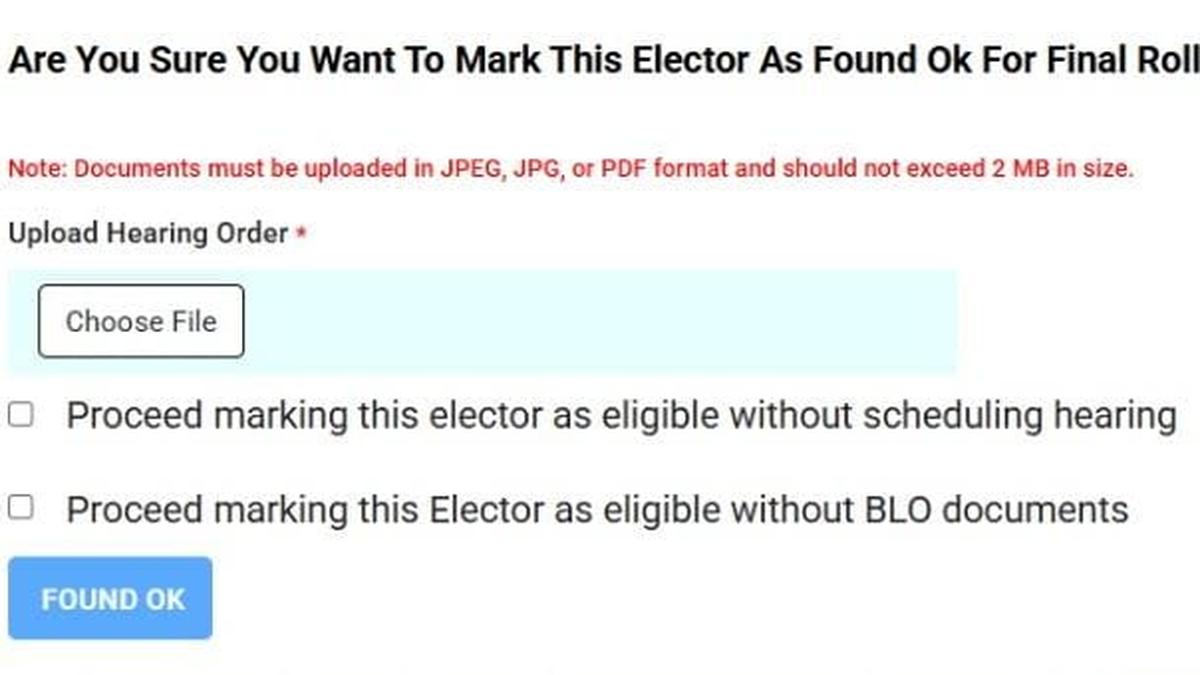
AP IndiaNew options on the Election Commission's ECINET portal allow EROs in Delhi to clear voters without documents or hearings.
The HinduThe ECINET portal changes were introduced amid allegations of centralisation of its functioning for special intensive revision of electoral rolls.
The Hindu
AP India·Google News India·Indian Express·The Hindu