Protesters Detained in Delhi Demanding CEC Gyanesh Kumar's Removal
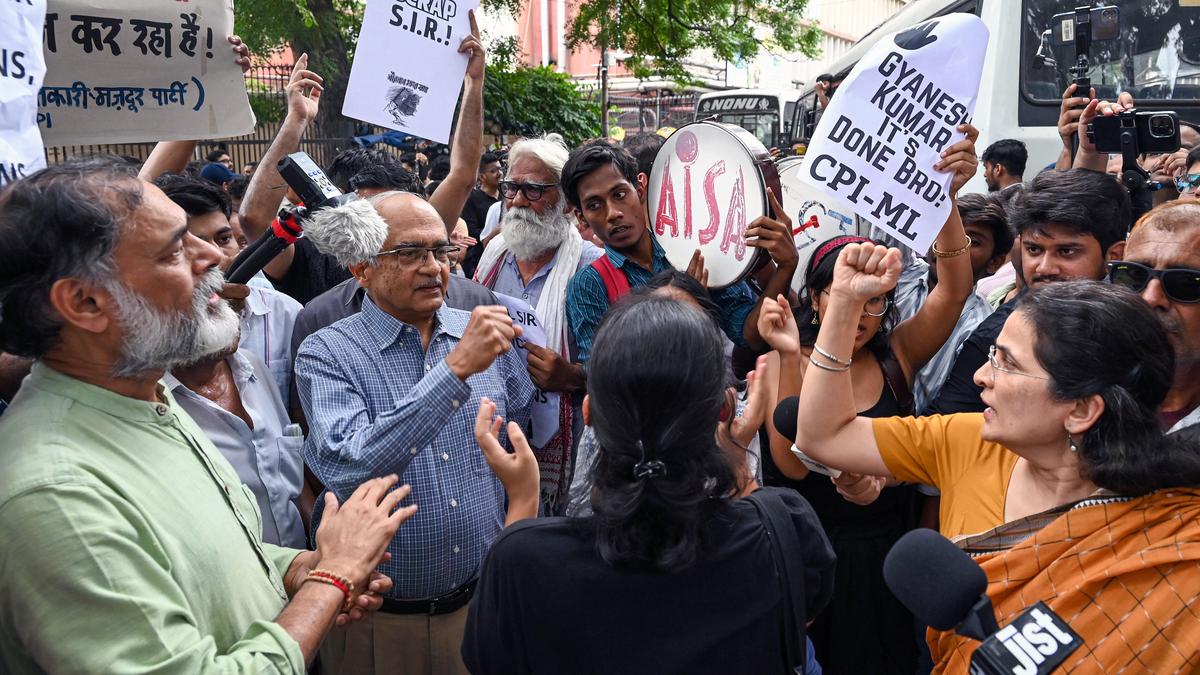
Yesterday, Delhi police detained around 90 demonstrators, including political leaders, who had gathered to demand the removal and arrest of Chief Election Commissioner Gyanesh Kumar.
The Election Commission has postponed Chief Election Commissioner Gyanesh Kumar's planned youth outreach programmes, though the specific reasons for the delay have not been detailed in available reports. The programmes were intended to engage younger voters as part of the Commission's broader electoral participation efforts. The postponement comes as the EC continues its voter awareness initiatives ahead of upcoming electoral cycles.
The Election Commission's decision to "postpone" CEC Gyanesh Kumar's youth outreach programmes yesterday is a tacit admission that his position has become untenable. The trigger is the September 23 revelation that two sitting Election Commissioners, Sukhbir Singh Sandhu and Vivek Joshi, formally recorded objections on 14 separate occasions over 10 months — a breakdown of institutional consensus that strikes at the EC's constitutional mandate of unanimity or majority consensus. When the CEC overrides dissenting colleagues on matters as sensitive as the Special Intensive Revision of electoral rolls, he converts a constitutional body into a personal fiefdom.
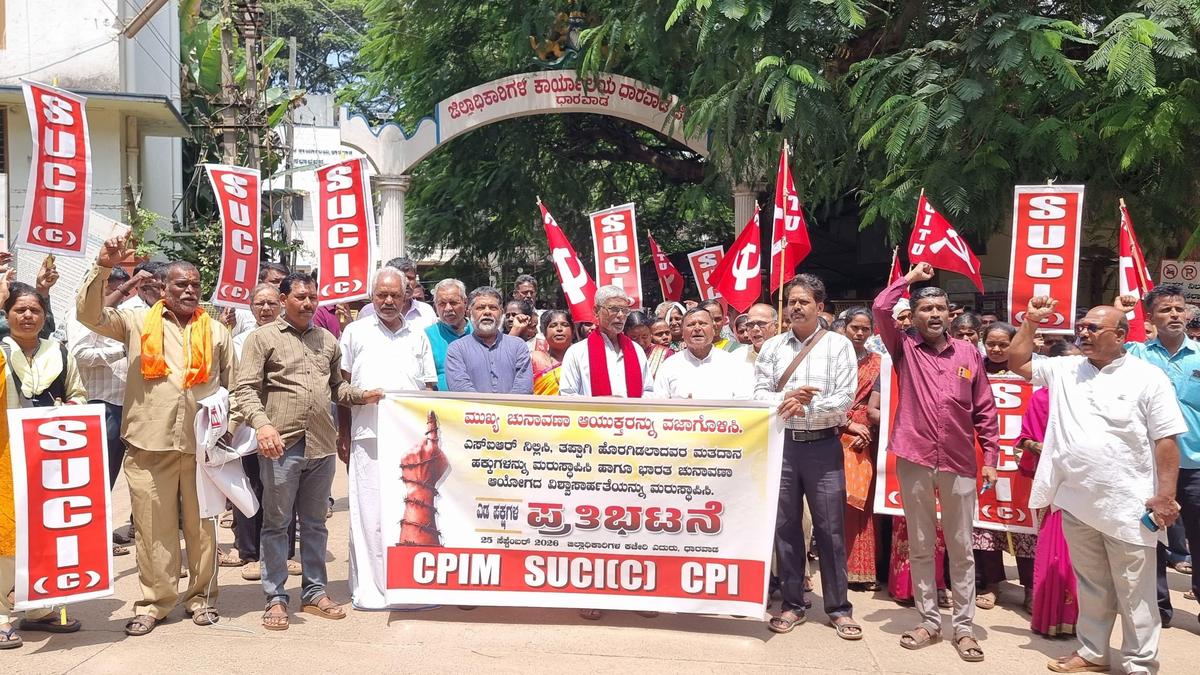
The protests yesterday were not spontaneous outrage but a coordinated national response: Congress, Left parties, SFI, and AISA mobilised in Delhi, Patna, Dharwad, and Vijayawada demanding the CEC's removal and a halt to the SIR. In Delhi, police detained roughly 90 protesters including Devender Yadav, Dipankar Bhattacharya, and Nehra Bora; in Patna, water cannons were deployed against Congress workers marching to the CEO's office; in Dharwad, Left parties submitted a memorandum to the President via the Deputy Commissioner. Kerala LoP Pinarayi Vijayan stated plainly that the EC's credibility has been "completely undermined." The EC's damage-control postponement cannot paper over a crisis of legitimacy that its own Commissioners have documented.
The postponement of youth outreach programmes is a routine administrative decision to avoid politicising a voter-education initiative, not a concession on the CEC's legitimacy. The Election Commission functions by majority vote under the Election Commission (Conditions of Service) Act, 1991, and recorded dissent is a normal feature of collegiate bodies — it does not paralyse the Commission's constitutional mandate to prepare electoral rolls. The Special Intensive Revision is a time-bound statutory exercise mandated by the Representation of the People Act, and halting it on political demand would itself violate the EC's duty to maintain accurate rolls before the next election cycle. Delhi Police detained protesters at Jantar Mantar and Nirvachan Sadan for violating prohibitory orders and gathering without permission, standard law-enforcement procedure when demonstrations breach public-order conditions.
The claim that recorded dissent is a "normal feature" of collegiate bodies ignores the scale: 14 formal objections by two Commissioners over 10 months on matters including the Special Intensive Revision is not routine disagreement — it is a sustained breakdown of the consensus the EC's constitutional authority rests on. The postponement came the day after this record became public and after coordinated protests in Delhi, Patna, Dharwad, and Vijayawada demanding the CEC's removal and a halt to the SIR; calling it a "routine administrative decision" to avoid politicisation strains credulity when the CEC's own colleagues have documented his override of their objections. Kerala LoP Pinarayi Vijayan stated the EC's credibility has been "completely undermined" — a judgment rooted in the Commissioners' own dissent, not political rhetoric. Detaining roughly 90 protesters including Devender Yadav, Dipankar Bhattacharya, and Nehra Bora at Jantar Mantar and Nirvachan Sadan, and using water cannons on Congress workers in Patna, treats a legitimacy crisis as a law-and-order problem.
The Opposition's rebuttal conflates recorded dissent with institutional paralysis. The Election Commission (Conditions of Service) Act, 1991 explicitly provides for majority decision-making; dissenting opinions are recorded precisely so the Commission can function despite disagreement — a design feature, not a breakdown. The Special Intensive Revision remains a statutory obligation under the Representation of the People Act with fixed timelines; suspending it because political parties demand the CEC's removal would subordinate a constitutional mandate to street pressure. Delhi Police enforced prohibitory orders at Jantar Mantar and Nirvachan Sadan after protesters gathered without permission — standard procedure upheld by courts repeatedly. The postponement of a youth outreach programme is an administrative call to keep a voter-education initiative non-partisan; reading it as a concession confuses scheduling with substance.
The Election Commission postponed CEC Gyanesh Kumar's youth outreach programmes on September 25, a day after media reports revealed two Election Commissioners had recorded formal objections on 14 occasions over 10 months (The Hindu). Opposition parties and student groups — including Congress, Left parties, SFI, and AISA — held coordinated protests in Delhi, Patna, Dharwad, and Vijayawada demanding the CEC's removal and a halt to the Special Intensive Revision of electoral rolls, with roughly 90 protesters detained in Delhi and water cannons used in Patna (The Hindu). The EC and Delhi Police maintain the postponement was a routine administrative decision to keep voter education non-partisan and that recorded dissent is a normal feature of the Commission's majority-vote structure under the 1991 Act, while the SIR remains a statutory obligation. The load-bearing question is whether the scale and substance of the documented internal dissent represents a routine collegiate difference or a legitimacy crisis that undermines the EC's constitutional authority.
Around 90 protesters were detained in Delhi on September 25, 2026, demanding CEC Gyanesh Kumar's removal and arrest.
The HinduDelhi Police detained around 50 protesters from Jantar Mantar for gathering without permission.
The HinduDelhi Congress Chief Devender Yadav, CPI(ML) Liberation General Secretary Dipankar Bhattacharya, and AISA President Nehra Bora were among those detained.
The HinduAnother protest was held by Students' Federation of India (SFI) outside Nirvachan Sadan.
The HinduNew Delhi DCP Sachin Sharma said 50-60 protesters were detained from Jantar Mantar.
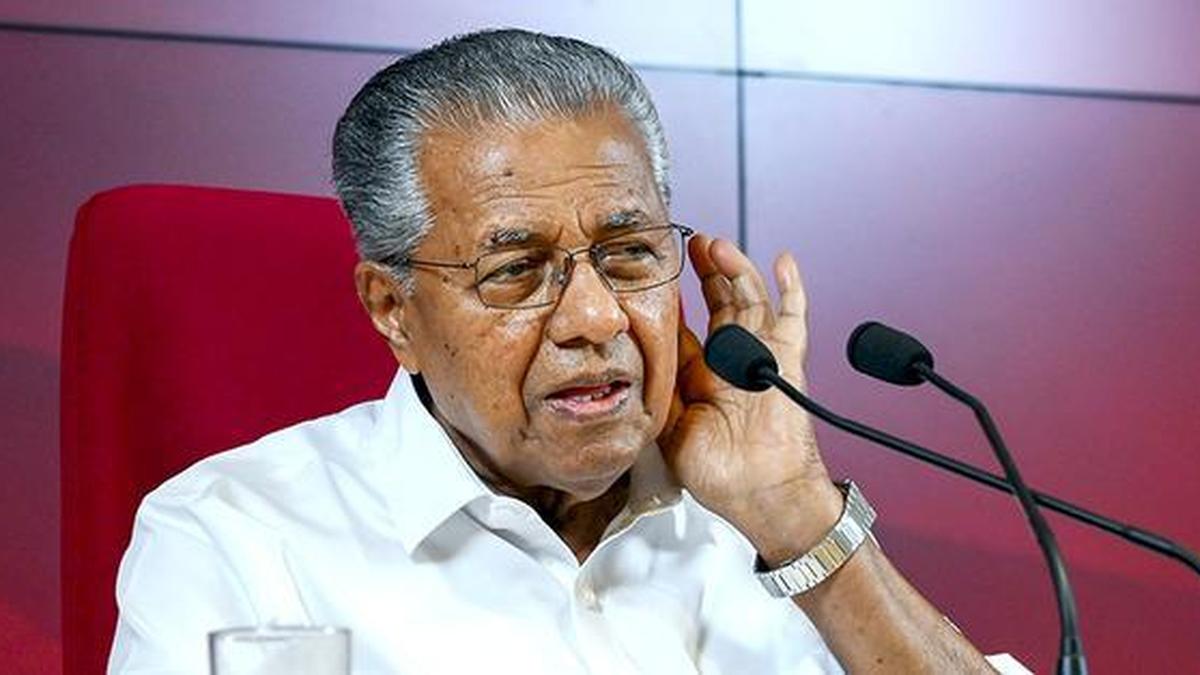
The HinduKerala Leader of Opposition Pinarayi Vijayan demanded immediate removal of CEC Gyanesh Kumar.
The HinduPinarayi Vijayan said the credibility of the Election Commission had been completely undermined.
The HinduPinarayi Vijayan cited media reports about CEC Gyanesh Kumar dismissing objections by Election Commissioners Sukhbir Singh Sandhu and Vivek Joshi.
The HinduLeft parties protested in Dharwad seeking removal of CEC Gyanesh Kumar and halt to Special Intensive Revision (SIR) of electoral rolls.
The HinduLeft parties submitted a memorandum to the President through the Deputy Commissioner in Dharwad.
The HinduThe Dharwad protest followed a September 23 media report that two Election Commissioners recorded objections on 14 occasions over 10 months.
The HinduBihar Congress staged a protest in Patna on September 25, 2026, against CEC Gyanesh Kumar.
The HinduBihar Police used water cannons to disperse Congress workers attempting to reach the Chief Electoral Officer's premises.
The HinduLeft parties in Vijayawada demanded removal of CEC Gyanesh Kumar and suspension of the Special Intensive Revision (SIR) of electoral rolls.
The Hindu
The Hindu