AFSPA Extended in Parts of Manipur, Nagaland and Arunachal Pradesh
The Union Ministry of Home Affairs has extended the Armed Forces Special Powers Act for six months beginning October 1, 2026, across designated disturbed areas in the three northeastern states.
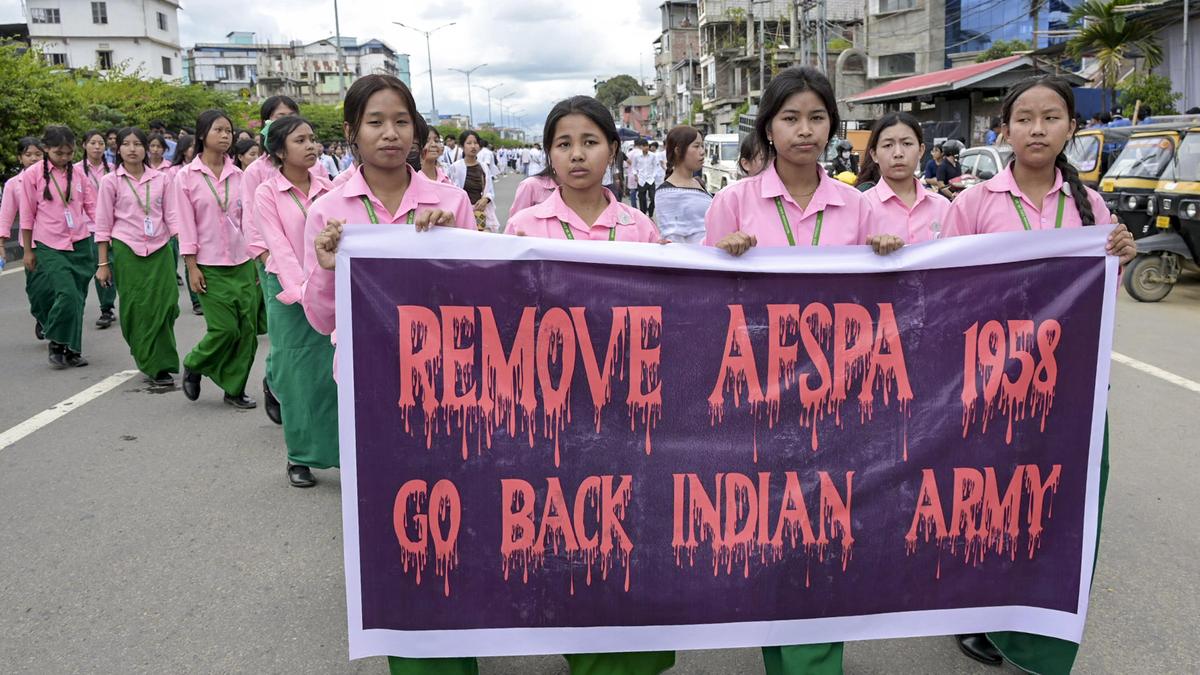
The Armed Forces (Special Powers) Act (AFSPA) has been extended in parts of Manipur, Nagaland, and Arunachal Pradesh, renewing a legal framework that grants the military sweeping powers to arrest, search, and use force in areas designated as "disturbed." The law has long been a flashpoint in India's northeast, where critics argue it enables impunity for rights abuses while the government maintains it is essential for counter-insurgency operations. The latest extension comes amid ongoing ethnic violence in Manipur that has killed over 200 people since May 2023, and a fragile ceasefire landscape in Nagaland where peace talks with Naga groups have stalled. In Arunachal Pradesh, the extension applies only to three districts bordering Assam, reflecting a gradual rollback from the law's once-wider footprint across the region.
The Union Ministry of Home Affairs has extended the Armed Forces (Special Powers) Act, 1958, in parts of Manipur, Nagaland and Arunachal Pradesh for six months beginning October 1, 2026 (The Hindu). In Manipur, the entire state has been declared a “disturbed area” under the Act, barring the jurisdictions of 13 police stations spread across five Valley districts: Imphal, Lamphel, City, Singjamei, Patsoi, Wangoi, Porompat, Heingang, Irilbung, Thoubal, Bishnupur, Nambol and Kakching (The Hindu).
The order comes against the backdrop of the ethnic conflict that erupted in Manipur on May 3, 2023. Before the violence broke out, AFSPA had been progressively withdrawn from several areas of the state. The Ministry of Home Affairs began restoring it in some areas after the security situation deteriorated (The Hindu). The conflict has killed more than 200 people since May 2023, according to official tallies cited in earlier government statements.
In Nagaland, the Act will continue in nine districts — Dimapur, Niuland, Chumoukedima, Mon, Kiphire, Noklak, Phek, Peren and Meluri — as well as in areas under 21 police stations in five other districts: Kohima, Mokokchung, Longleng, Wokha and Zunheboto (The Hindu). The extension maintains a security architecture that has persisted despite a ceasefire with major Naga groups that has held, in fits and starts, since 1997. Peace talks between the Centre and Naga negotiators have stalled over the demand for a separate flag and constitution, leaving the legal framework for military deployment intact.
In Arunachal Pradesh, the Act has been extended in Tirap, Changlang and Longding districts, and in areas under the Namsai, Mahadevpur and Chowkham police stations in Namsai district bordering Assam (The Hindu). The limited geographical application reflects a gradual rollback from the law’s once-wider footprint across the state, where insurgency-linked violence has declined significantly over the past decade.
AFSPA was enacted in 1958 to give the armed forces special powers to operate in areas declared “disturbed” because of insurgency or serious internal security problems (The Hindu). Once an area is notified under Section 3, security personnel receive powers that ordinary police do not have: the authority to use force, including lethal force, against persons acting in contravention of prohibitory orders; to arrest without a warrant; and to enter and search premises without a warrant (The Hindu). The law also provides legal protection to personnel acting under it — prosecution, suit or other legal proceedings require the previous sanction of the Central government (The Hindu). It is these extraordinary powers and the protection against prosecution without the Centre’s sanction that make AFSPA contentious.
Both the Central government and State governments have the power to declare an area disturbed under Section 3 (The Hindu). For decades, the Manipur government itself issued the disturbed-area notifications. Though AFSPA had been in operation in the state since 1981, the Ministry of Home Affairs had largely left the periodic renewal of the notification to the state government, a practice that changed after the May 3, 2023 ethnic violence (The Hindu). The law first came into effect to deal with the uprising in the Naga Hills, followed by the insurgency in Assam, and has since been extended to other northeastern states and Jammu and Kashmir at various points.
The latest extension renews a legal framework that has long been a flashpoint in India’s northeast. Critics argue it enables impunity for rights abuses; the government maintains it is essential for counter-insurgency operations. With the Manipur conflict unresolved and Naga peace talks at an impasse, the six-month window sets the next review for April 2027.
The Hindu