Captive-Bred Great Indian Bustards Released into the Wild in Jaisalmer
Today, the Union Environment Minister and the Rajasthan Chief Minister initiated the release of captive-bred Great Indian Bustards into the wild at Desert National Park, culminating a decade of conservation efforts.
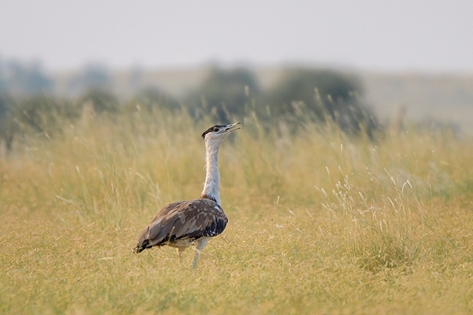
The release of captive-bred Great Indian Bustards into the wild at Desert National Park in Jaisalmer marks the culmination of a decade of dedicated conservation work. The event, initiated by the Union Environment Minister and the Rajasthan Chief Minister, represents a critical milestone for a species that has faced severe population decline. This reintroduction effort aims to bolster the wild population of one of India's most critically endangered birds.
Union Environment Minister Bhupender Yadav and Rajasthan Chief Minister Bhajan Lal Sharma on Saturday initiated the process for releasing captive-bred Great Indian Bustards into the wild at Desert National Park in Jaisalmer, marking the culmination of a decade-long conservation programme for the critically endangered species (PIB).
The event represents a pivotal milestone in the recovery plan for Ardeotis nigriceps, a bird once widespread across the Indian subcontinent but now confined largely to fragments of Rajasthan and Gujarat. With fewer than 150 individuals estimated to survive in the wild, the species has been classified as critically endangered by the International Union for Conservation of Nature. The release protocol initiated on Saturday follows ten years of habitat management, threat mitigation, and the establishment of a conservation breeding programme managed by the Wildlife Institute of India in collaboration with the Rajasthan Forest Department and international partners.
Officials said the birds slated for release were hatched and reared at the dedicated breeding centres established in Jaisalmer and Kota. The programme focused on refining artificial incubation techniques, chick-rearing protocols, and pre-release conditioning to ensure the birds can survive predation and navigate the arid grassland ecosystem. The Desert National Park, spread over 3,162 square kilometres, has been the focal point for habitat restoration, including the removal of invasive species and the undergrounding of power lines to reduce collision mortality, a leading cause of death for the heavy-bodied fliers.
The joint participation of the Union Minister and the Chief Minister underscores the intergovernmental coordination required to address the multi-faceted threats facing the bustard, which range from habitat loss due to agricultural expansion to infrastructure hazards. While the initiation of the release process is a significant procedural step, conservationists caution that the long-term viability of the wild population will depend on sustained monitoring of the released birds, continued habitat security, and the mitigation of high-tension power lines across the broader landscape. The success of this first phase will determine the scale and pace of future supplementation efforts.
PIB