US Trade Chief Says Trade Deal With India Not Imminent
Yesterday, U.S. Trade Representative Jamieson Greer stated that a trade agreement between the United States and India is not imminent due to numerous sticking points.
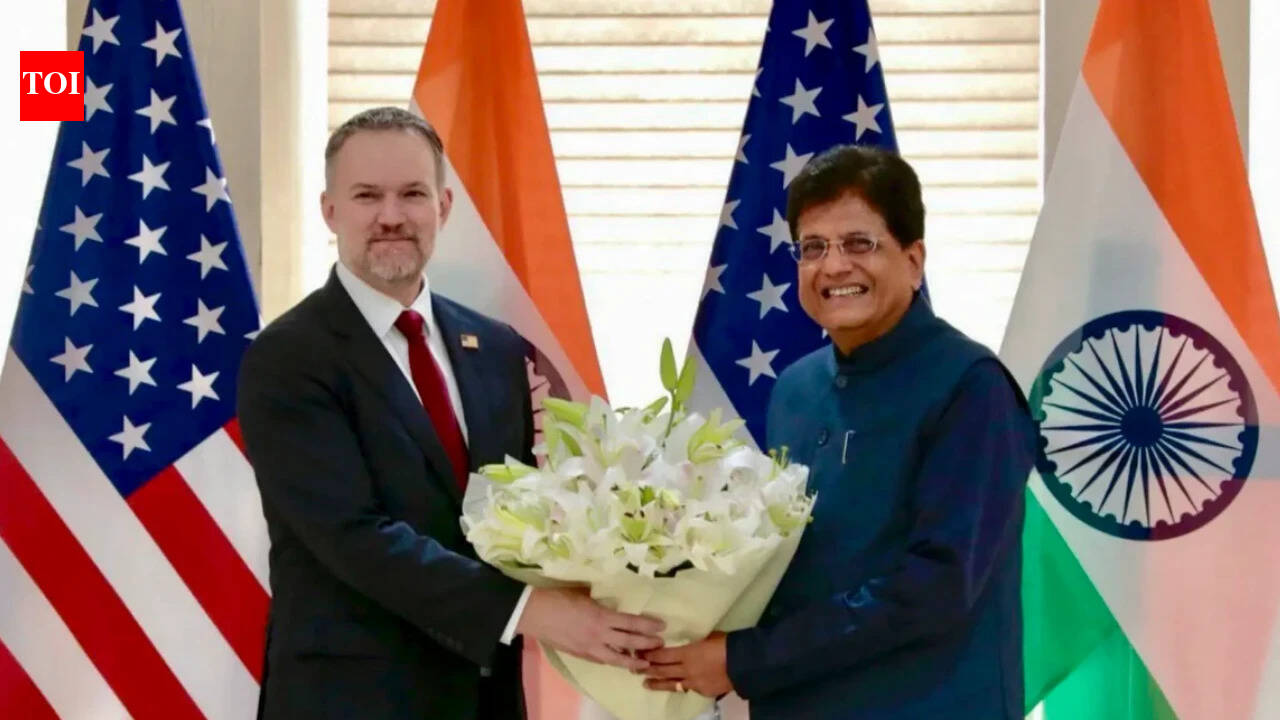
U.S. Trade Representative Jamieson Greer said a trade deal with India is not imminent, noting that the two sides have identified the universe of sticking points in their negotiations. The remarks signal that significant differences remain unresolved despite ongoing talks.
U.S. Trade Representative Jamieson Greer said on Thursday that a trade deal with India is not imminent, telling Indian news agency ANI that the two sides have "truly identified the universe of items that are sticking points." The remarks came a day after President Donald Trump and Prime Minister Narendra Modi held what Greer described as a "very constructive" phone call, and as Commerce Minister Piyush Goyal conducted bilateral meetings in Washington ahead of the G20 trade ministers gathering in Milwaukee (Indian Express, Reuters India, Google News India).
Goyal struck a more optimistic tone in a social media post, saying discussions with Greer focused on the "early conclusion of a mutually beneficial interim agreement under the India-US Bilateral Trade Agreement." The contrast in framing underscores the gap between the two capitals. "Goyal is counting the issues already resolved, and Greer is counting the ones that remain," Ronak D. Desai, a visiting fellow at Stanford's Hoover Institution, told CNBC, adding that the final issues in any trade negotiation are typically the hardest (Google News India).
For Washington, India's continued purchases of Russian oil remain a primary friction point. The U.S. administration argues that New Delhi's imports of Moscow's barrels fund the war in Ukraine, a stance that has already triggered tariff escalation. The U.S. imposed a 25% punitive tariff on India last August for buying Russian oil, raising total duties on Indian imports to 50%. In February, those duties were reduced to 18%, with Trump claiming India had "agreed to stop buying Russian Oil, and to buy much more from the United States and, potentially, Venezuela." New Delhi did not endorse those details, maintaining that energy security drives its purchasing decisions (Google News India).
Since the start of the year, the U.S. and Venezuela combined have become more significant suppliers to India's energy basket, but global supply constraints linked to the Iran war have complicated diversification efforts. On India's side, the priority is protecting politically sensitive agricultural sectors and retaining preferential tariffs that give its exports an edge over competitors. Modi characterized his Wednesday conversation with Trump as "productive," noting the leaders reviewed trade, defense, energy, critical technologies, and efforts to advance global peace and security (Google News India).
The trade talks now face the additional risk of Washington slapping tariffs of up to 100% on India for its Russian oil purchases, a move that could derail negotiations entirely. With the "universe of sticking points" mapped but unresolved, the timeline for even an interim agreement remains uncertain.
Google News India·Indian Express·Reuters India